
Supervised Learning: First Principles
This volume of Artificial Intelligence: Foundations and Frontiers approaches Supervised L…
Supervised LearningView Book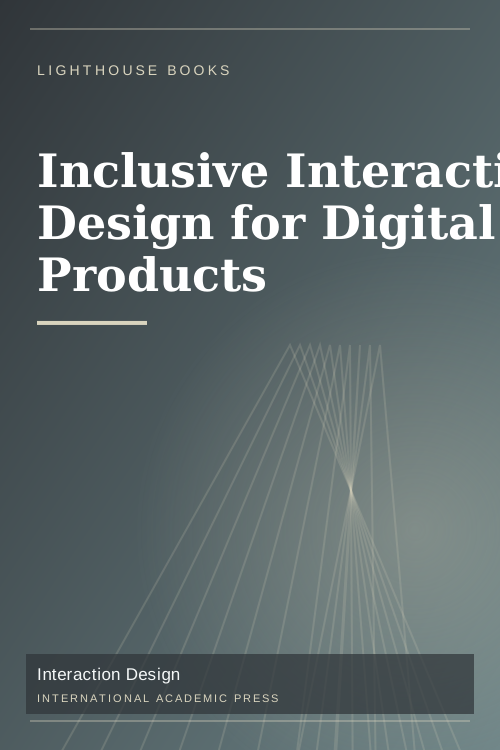
This study proposes a focused inquiry into interaction design as it intersects with inclusive practices. Historical and contemporary materials are used selectively, giving the reader enough conceptual depth to judge competing explanations. The emphasis is on interaction design viewed through inclusive practices, with architecture examples, reproducible experiments, benchmarks, and technology tradeoffs. Which mechanisms explain observed differences without confusing correlation with cause?
Introduction — Inclusive Interaction Design for Digital Products
1. The Problem and Its Vocabulary in Interaction Design
2. Evidence, Sources, and Their Limits for Inclusive Practices
3. Historical and Conceptual Foundations of Interaction Design
4. Methods for Comparative Inquiry in Human Computer Interaction and Digital Design
5. Observation, Measurement, and Meaning: Interaction Design
6. Synthesis and Further Questions: Inclusive Practices
7. Alternative Explanations and Counterexamples: Human Computer Interaction and Digital Design
8. Ethics, Access, and Practical Limits: Interaction Design
9. Mechanisms and Explanatory Models: Inclusive Practices
10. Interpretation Across Scales: Human Computer Interaction and Digital Design
11. Institutions, Practices, and Context: Interaction Design
12. Assessing Strength of Evidence: Inclusive Practices
Conclusion — What the Evidence Allows
References and Further Reading
Index
This volume of Artificial Intelligence: Foundations and Frontiers approaches Supervised L…
Supervised LearningView Book
Learning Technologies and AI treats Learning Management Systems as a distinct field of in…
Learning Management SystemsView Book
Programming from First Principles treats Variables and Values as a distinct field of inqu…
Variables and ValuesView Book
Readers exploring Data Collection Design encounter a carefully bounded quantitative reaso…
Data Collection DesignView Book
Built around how algorithms learn from examples and make errors, this accessible referenc…
Artificial IntelligenceView Book
Readers encounter data cleaning through the revealing, and sometimes contested, perspecti…
Data CleaningView Book